
“Type 2 diabetes does not develop overnight. The risk of disease often builds over decades and is shaped by biological, social, and behavioral factors at different stages of life,” says Prof. Andreas L. Birkenfeld, MD, Medical Director of the Department of Diabetology, Endocrinology and Nephrology at University Hospital Tübingen, Director of the Institute for Diabetes Research and Metabolic Diseases (IDM) of Helmholtz Munich at the University of Tübingen, and a member of the Executive Board of the German Center for Diabetes Research (DZD). “If we want to prevent diabetes effectively, preventive measures must therefore begin much earlier and take individual risks across the entire life course into account.”
Prevention begins long before disease onset
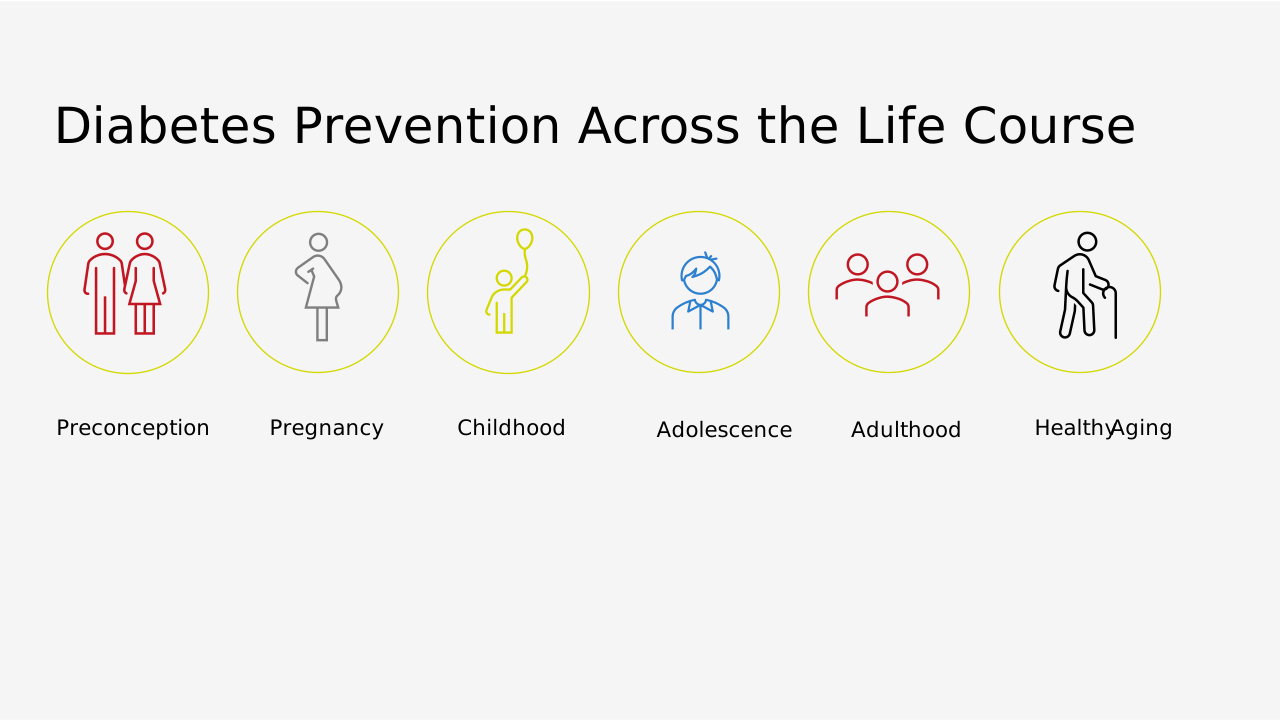
The authors propose a so-called life-course approach. Rather than viewing diabetes prevention as a single intervention in adulthood, this approach treats it as a continuous effort throughout life. Six life stages are particularly important: the period before pregnancy, pregnancy, early childhood, adolescence and young adulthood, and midlife.
“Many people think of diabetes prevention mainly in terms of diet and exercise in adulthood,” says first author Yiying Wang, a medical doctoral researcher at University Hospital Tübingen. “However, the risk of developing the disease later in life is shaped much earlier. The metabolic health of both the mother and the father before pregnancy can influence the future metabolic health of their child. Pregnancy and breastfeeding provide further important opportunities to positively shape the health of both generations.”
Restoring health rather than merely slowing disease
A central concept of the publication is remission. According to the authors, prevention should not only aim to slow the progression of disease. Instead, the goal should be to restore metabolic health as early as possible and preserve it over the long term.
This is particularly relevant for prediabetes. At this stage preceding type 2 diabetes, blood glucose levels are already elevated but remain below the diagnostic threshold for diabetes. Studies show that targeted lifestyle interventions can often restore normal blood glucose regulation. People who achieve this have a substantially lower long-term risk of developing type 2 diabetes.
“Prediabetes is not an irreversible condition,” says senior author Birkenfeld. “Prediabetes remission—meaning a return to normal blood glucose levels—should therefore become a central goal of prevention. The aim is not merely to stop disease progression, but to restore metabolic health as early and as durably as possible.”
Ten priorities for the future of diabetes prevention
Beyond summarizing the current state of knowledge, the international panel of experts presents the first jointly developed ten-point framework for the future of diabetes prevention. In it, the authors identify what they consider the most important next steps for making prevention more effective—from life-course risk assessment and personalized prevention strategies to the use of digital and AI-supported tools, as well as new approaches that place greater emphasis on remission as a prevention target and aim to reduce health inequities.
With their ten-point framework, the authors establish the first international expert consensus on the key priorities for the future of diabetes prevention. The aim is to identify risks earlier, establish prediabetes remission as a central prevention target, and help people maintain metabolic health for as long as possible.
Original publication: Wang Y. et al. Type 2 diabetes prevention across the life course. Nature Medicine (2026). DOI: 10.1038/s41591-026-04550-z
Scientific contact:
Prof. Dr. Andreas Birkenfeld
Medical Director
Clinic for Diabetology, Endocrinology, and Nephrology
University Hospital Tübingen
Director of the Institute of Diabetes Research and Metabolic Diseases (IDM) of Helmholtz Munich at University of Tübingen
Press contact:
University Hospital Tübingen
Corporate Communications Department
Hoppe-Seyler-Straße 6, 72076 Tübingen
Tel. 07071 29-88548, Fax 07071 29-25024
presse@med.uni-tuebingen.de
Founded in 1805, Tübingen University Hospital is one of the leading centers of university medicine in Germany. Being one of the 33 university hospitals in Germany, it contributes to the successful combination of high-performance medicine, research and teaching. More than 400,000 inpatients and outpatients from all over the world benefit from this combination of science and practice every year. The clinics, institutes and centers bring together specialists from a wide range of disciplines under one roof.
The experts work together on an interdisciplinary basis and offer each patient the best possible treatment based on the latest research findings. The University Hospital of Tübingen is researching for better diagnoses, therapies and chances of recovery. Many new treatment methods are being clinically tested and applied here. In addition to diabetology, research in Tübingen focuses on neurosciences, oncology, immunology, infection research and vascular medicine. Over the past 25 years, the Chair of Diabetology / Endocrinology has been a center of interdisciplinary research, particularly involving surgery, radiology and laboratory medicine. www.medizin.uni-tuebingen.de/en-de
The German Center for Diabetes Research (DZD e.V.) is one of the eight German Centers for Health Research. It brings together experts in the field of diabetes research and combines basic research, epidemiology and clinical application. The aim of the DZD is to make a significant contribution to the successful, customized prevention, diagnosis and treatment of diabetes mellitus through a novel, integrative research approach. www.dzd-ev.de/en
